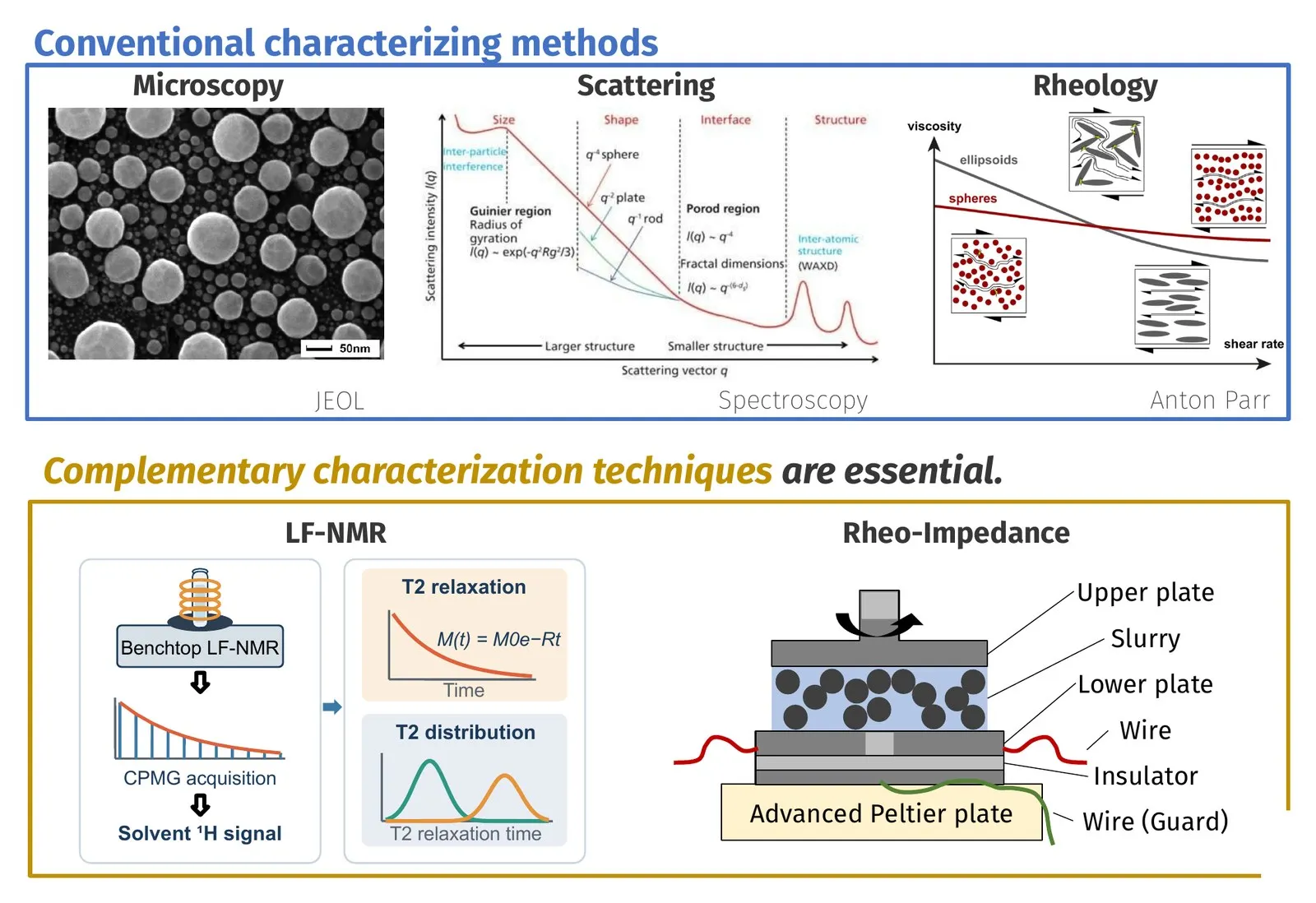
Why suspensions
Everything we coat begins as a suspension
Battery electrodes, fuel-cell catalyst layers, and functional films all start as concentrated suspensions — slurries, inks, and pastes whose flow decides whether the process succeeds.
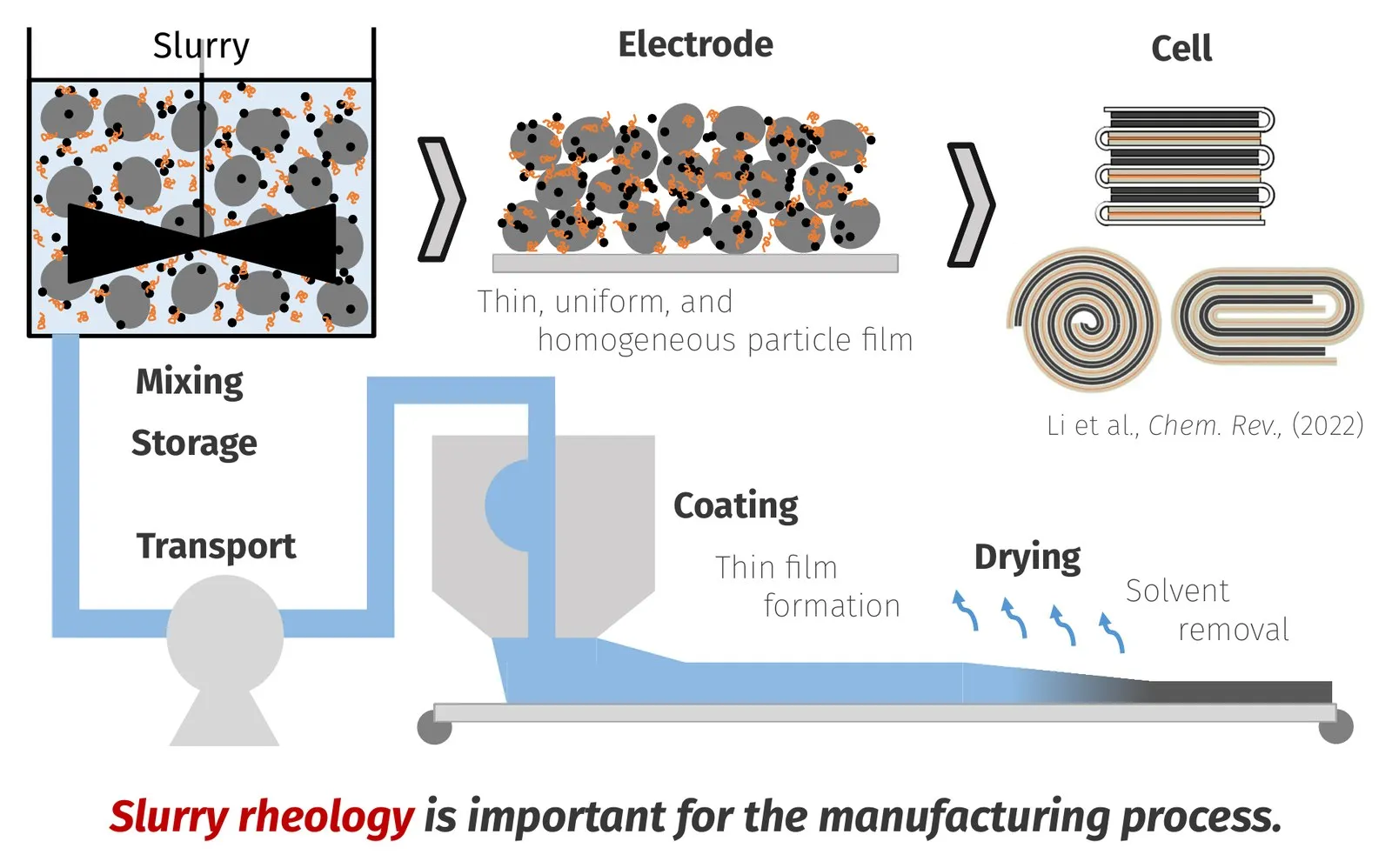
Process chain
From slurry to electrode to cell
Mixing, storage, transport, coating, drying — the slurry passes through every one of them before it becomes a thin, uniform particle film.
Rheological properties
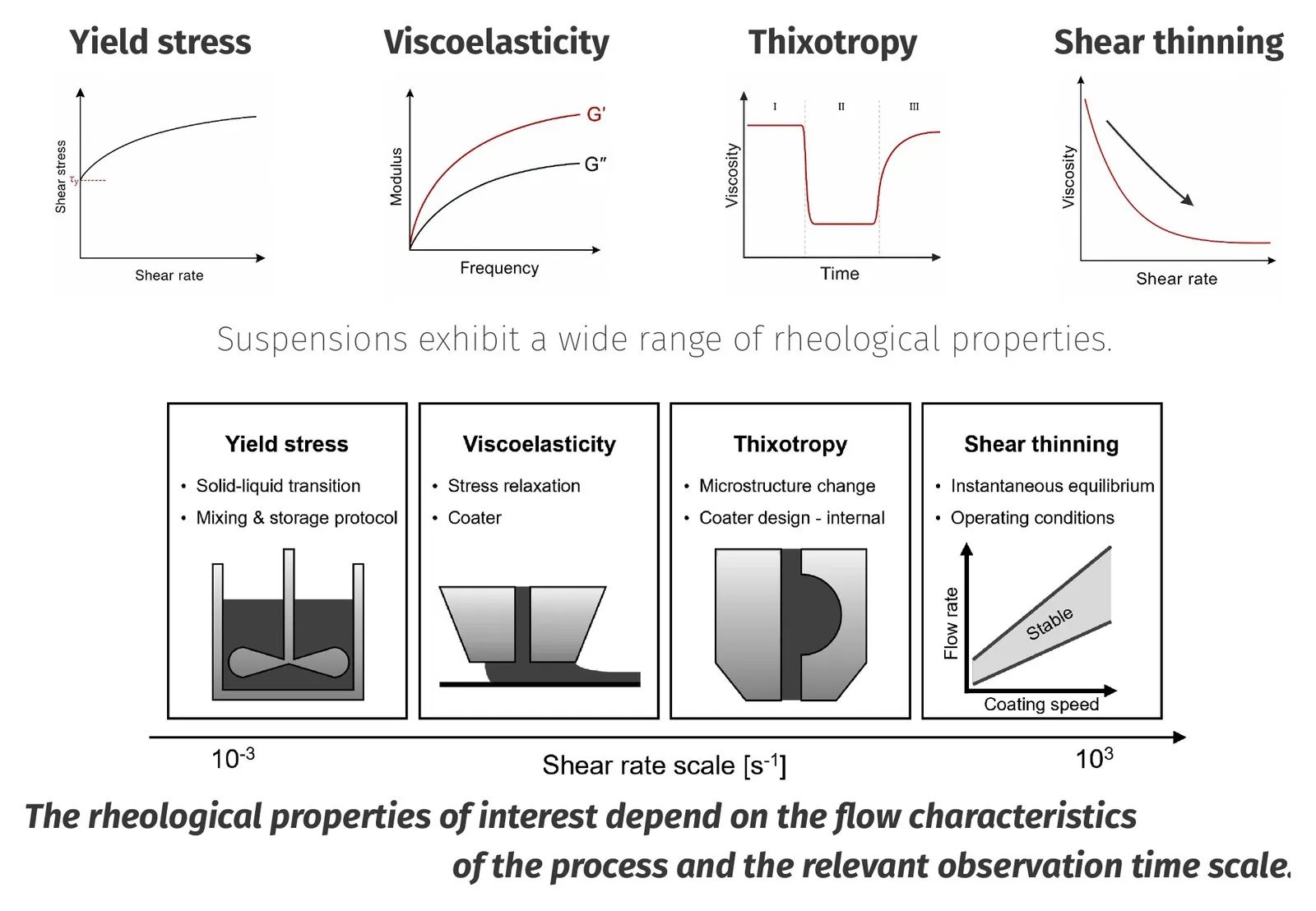
Rheological properties of suspensions
Yield stress, viscoelasticity, thixotropy, and shear thinning each govern a different corner of the process — from mixing and storage to the coater itself.
Flow & memory
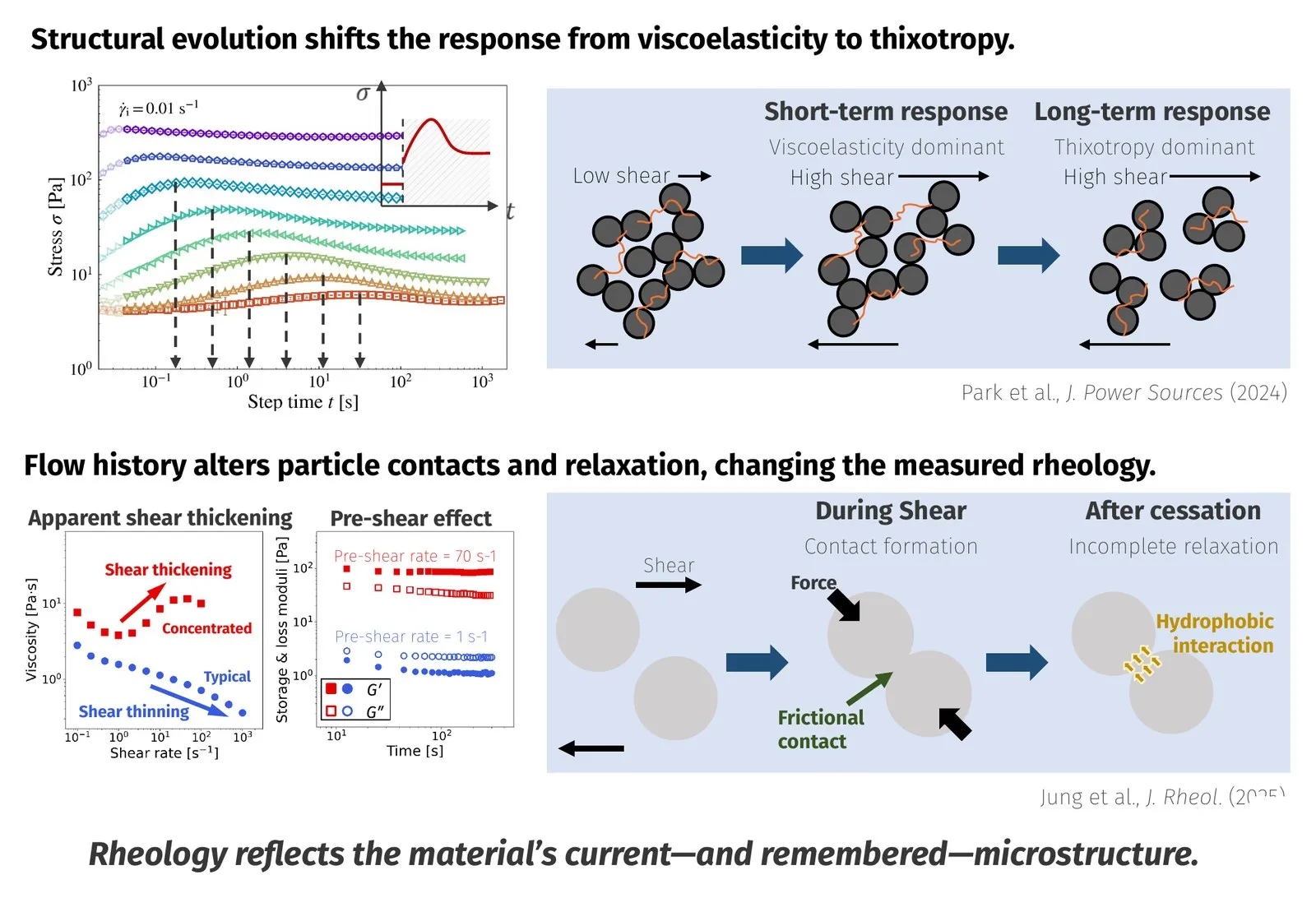
Microstructure links flow to rheology
Flow history alters particle contacts and their relaxation — so a measurement reports the structure a slurry has now, and the structure it remembers.
Microstructure
Complex hierarchical microstructures
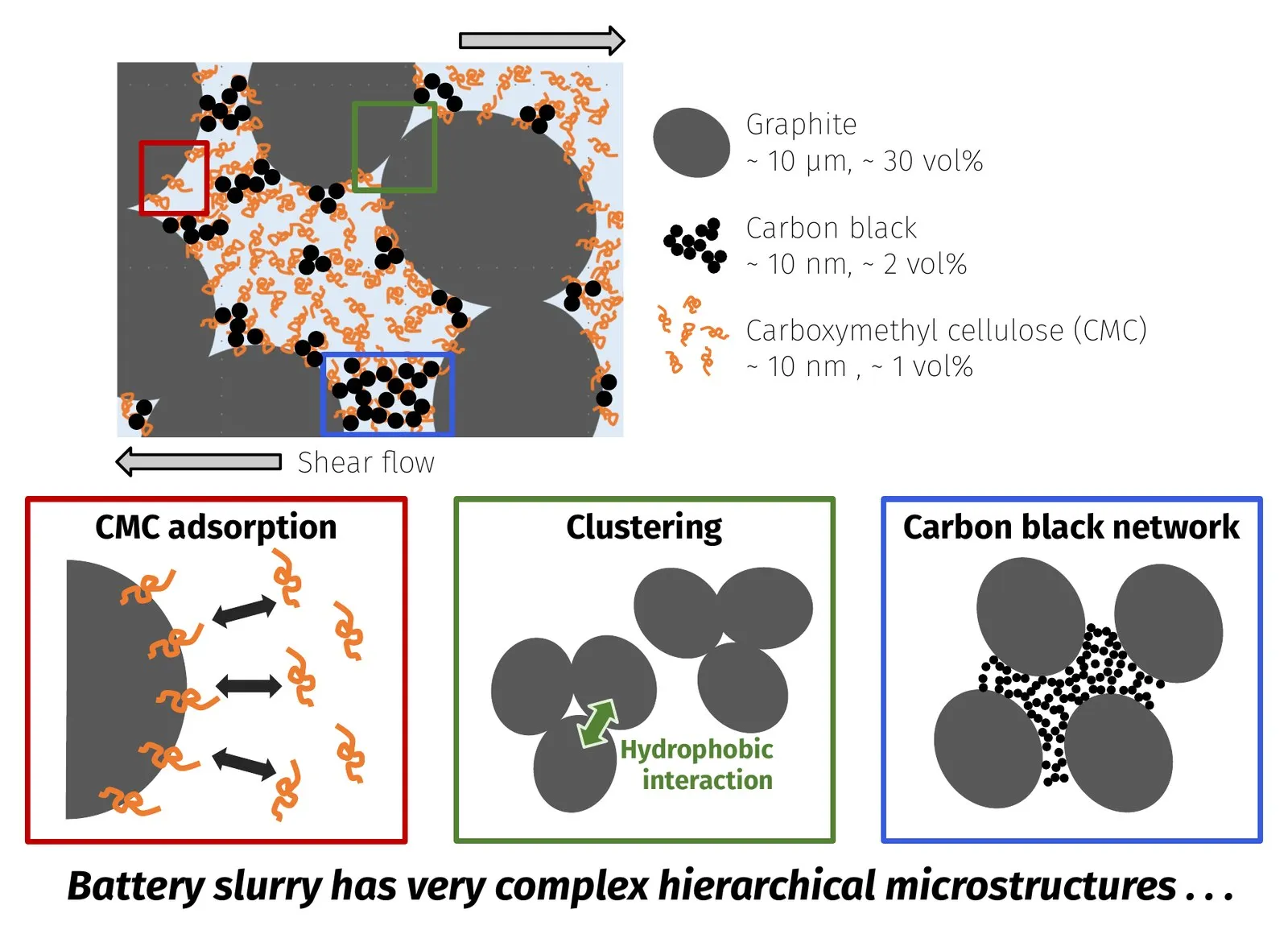
Graphite, carbon black, and CMC span three orders of magnitude in size — adsorption, clustering, and network formation all happen at once.
How we look
Microstructure characterization methods
Microscopy, scattering, and rheology are complementary — we add low-field NMR relaxometry and rheo-impedance to probe slurries without diluting them.