One process, many scales
From continuum films to individual particles
A coating flow is a continuum free-surface problem; a slurry is a crowd of interacting particles; a drying film is both at once. We choose the resolution that answers the question — FEM, phase field, or DEM.
Particles · DEM
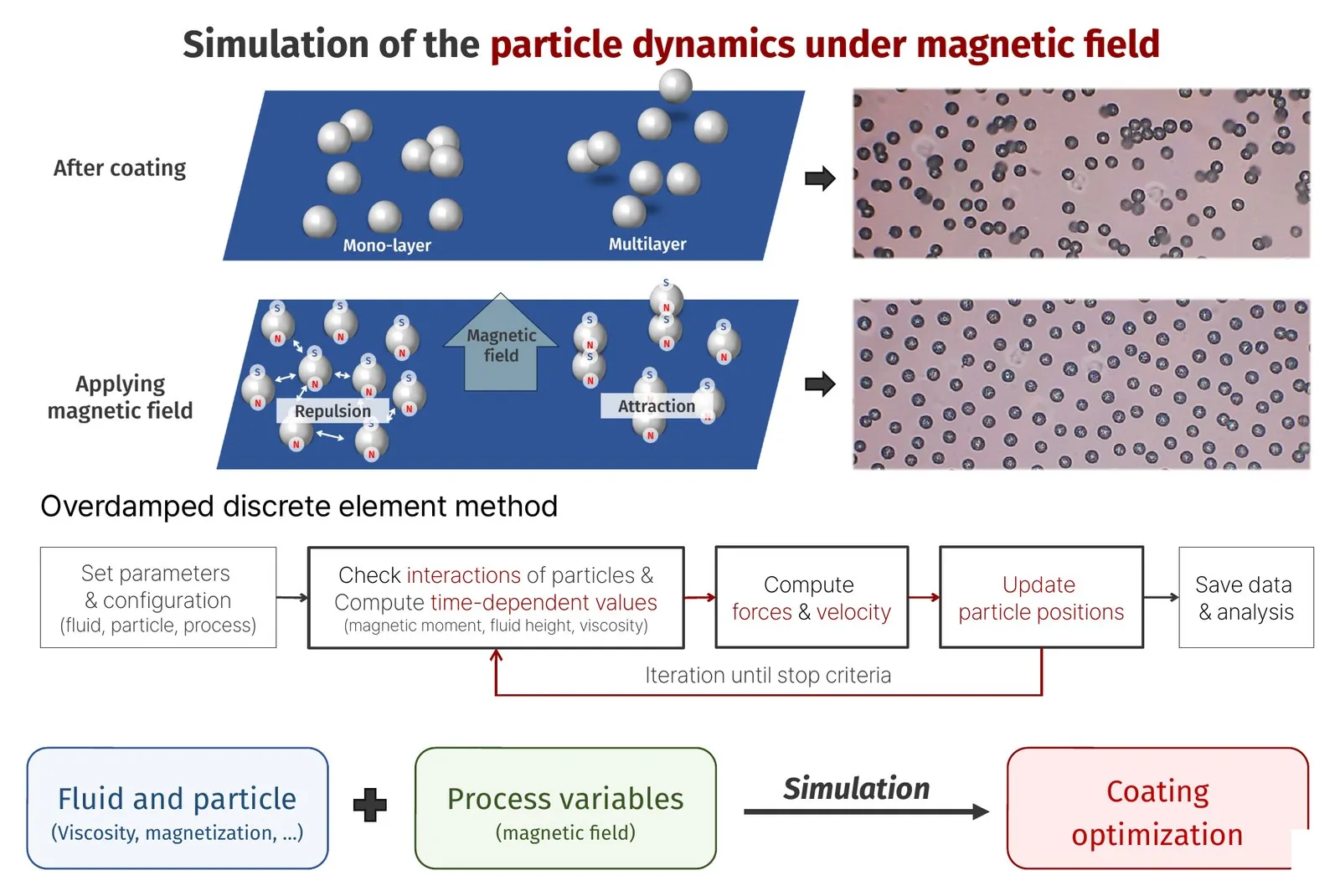
Discrete element method
An overdamped discrete-element model advances every particle under fluid and field forces — here, magnetic alignment of particles in a coated layer.
Interfaces · Phase field
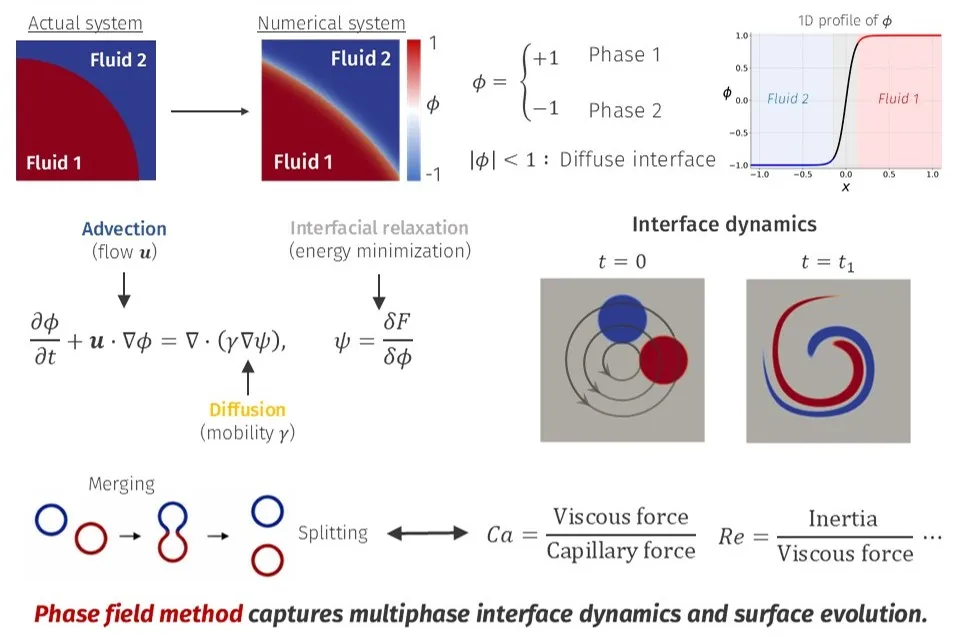
Phase field method
A diffuse-interface description follows merging, splitting, and surface evolution in multiphase flows without tracking the interface explicitly.
Complex fluids · FEM
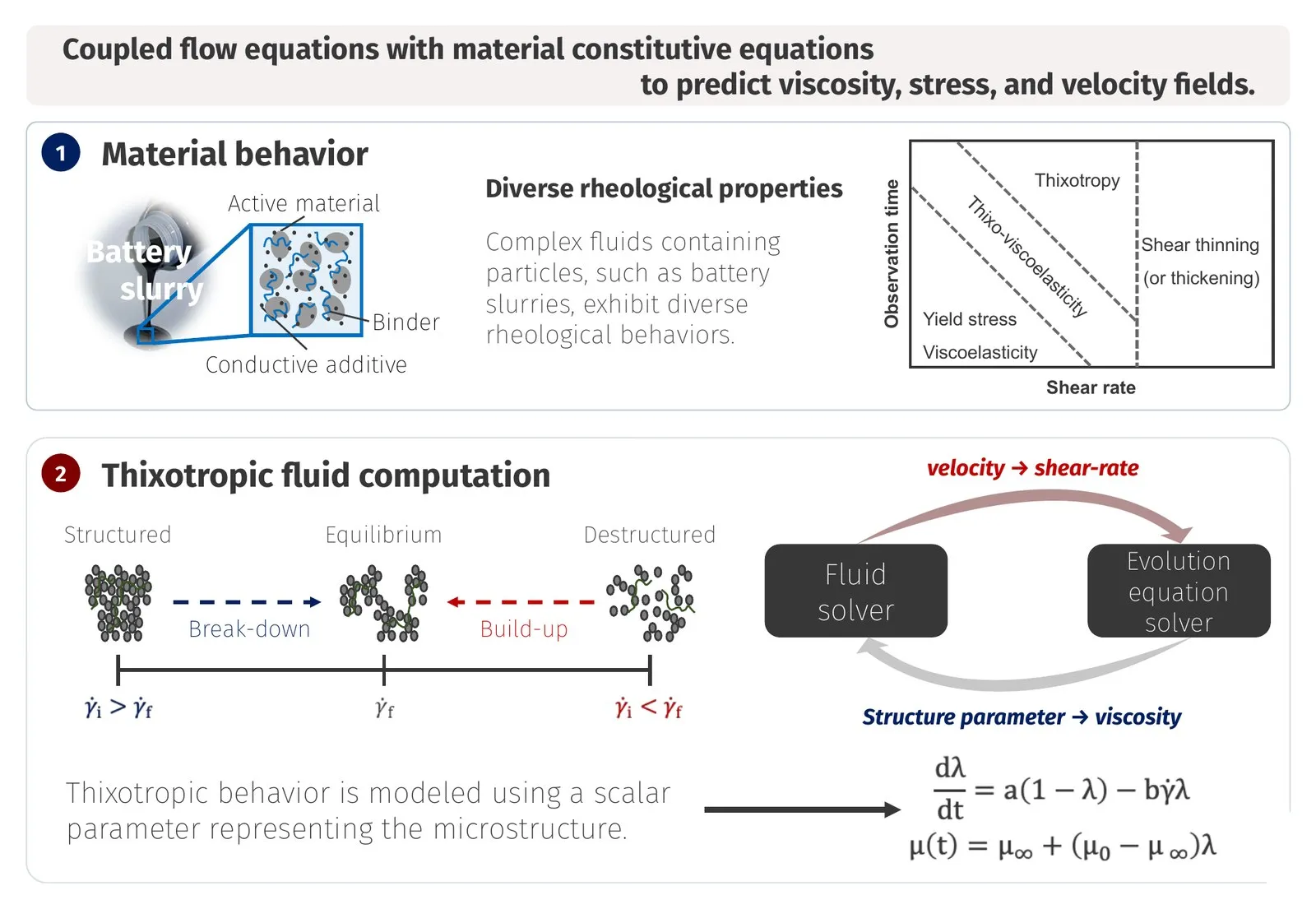
Complex fluid flow computation using FEM
Flow equations coupled with material constitutive equations predict viscosity, stress, and velocity fields — thixotropy enters through a scalar structure parameter.
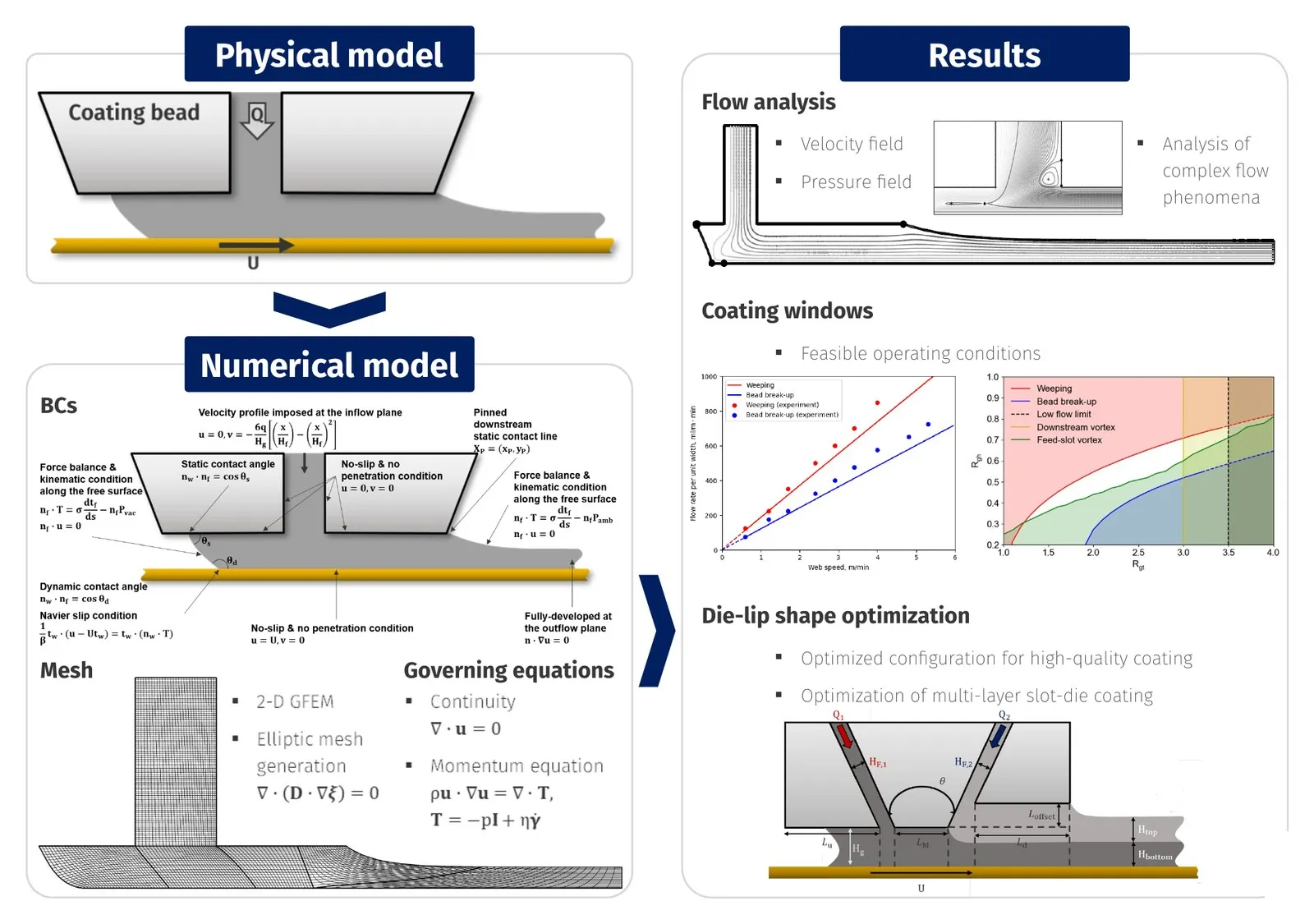
Coating bead · GFEM
2-D GFEM for slot-die coating bead flows
From governing equations and mesh generation to coating windows, complex flow phenomena, and die-lip shape optimization.
Free surfaces
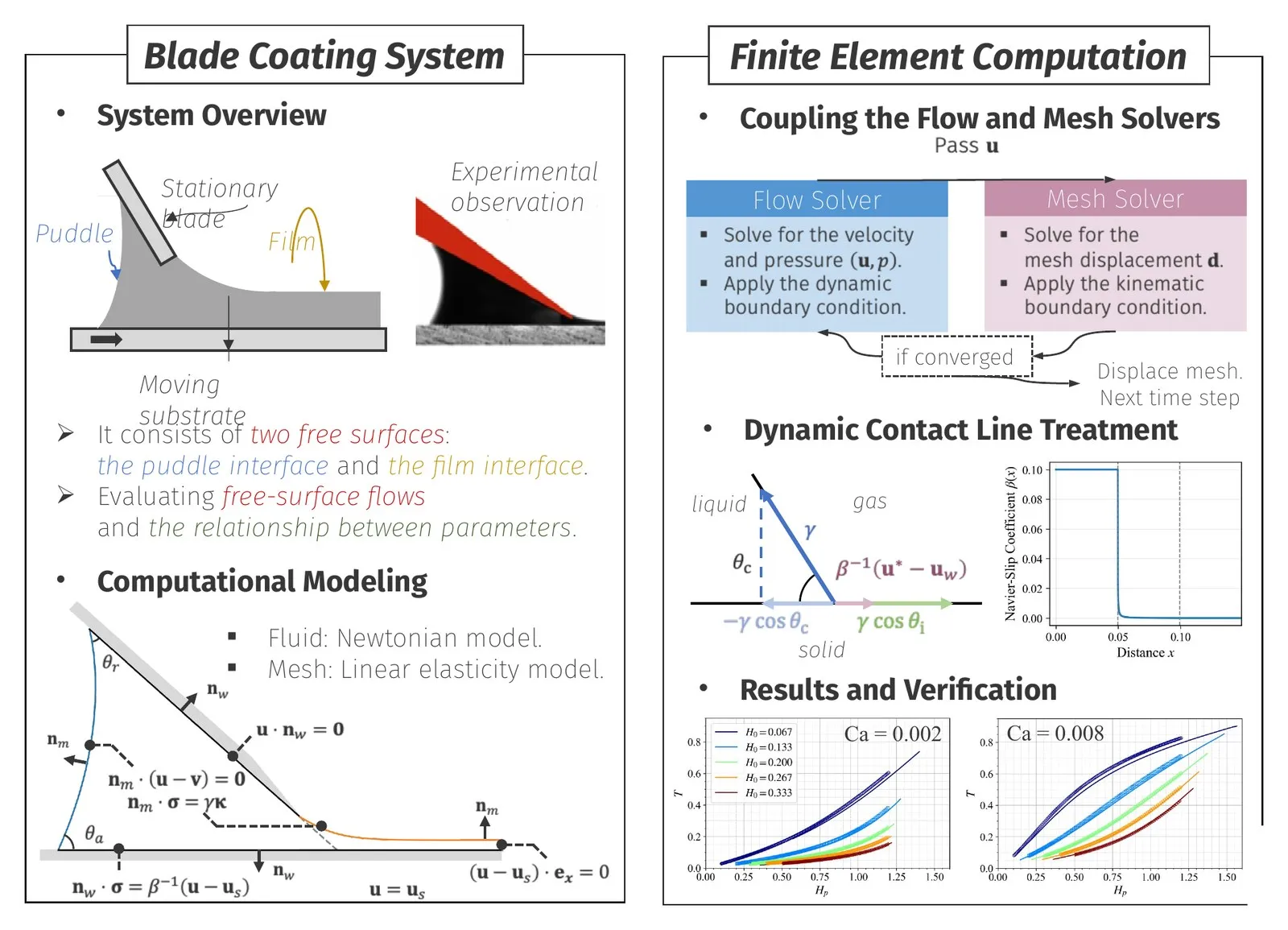
Computation of blade coating systems
Two free surfaces and a dynamic contact line, solved by coupling flow and mesh solvers — then verified against experimental observation.