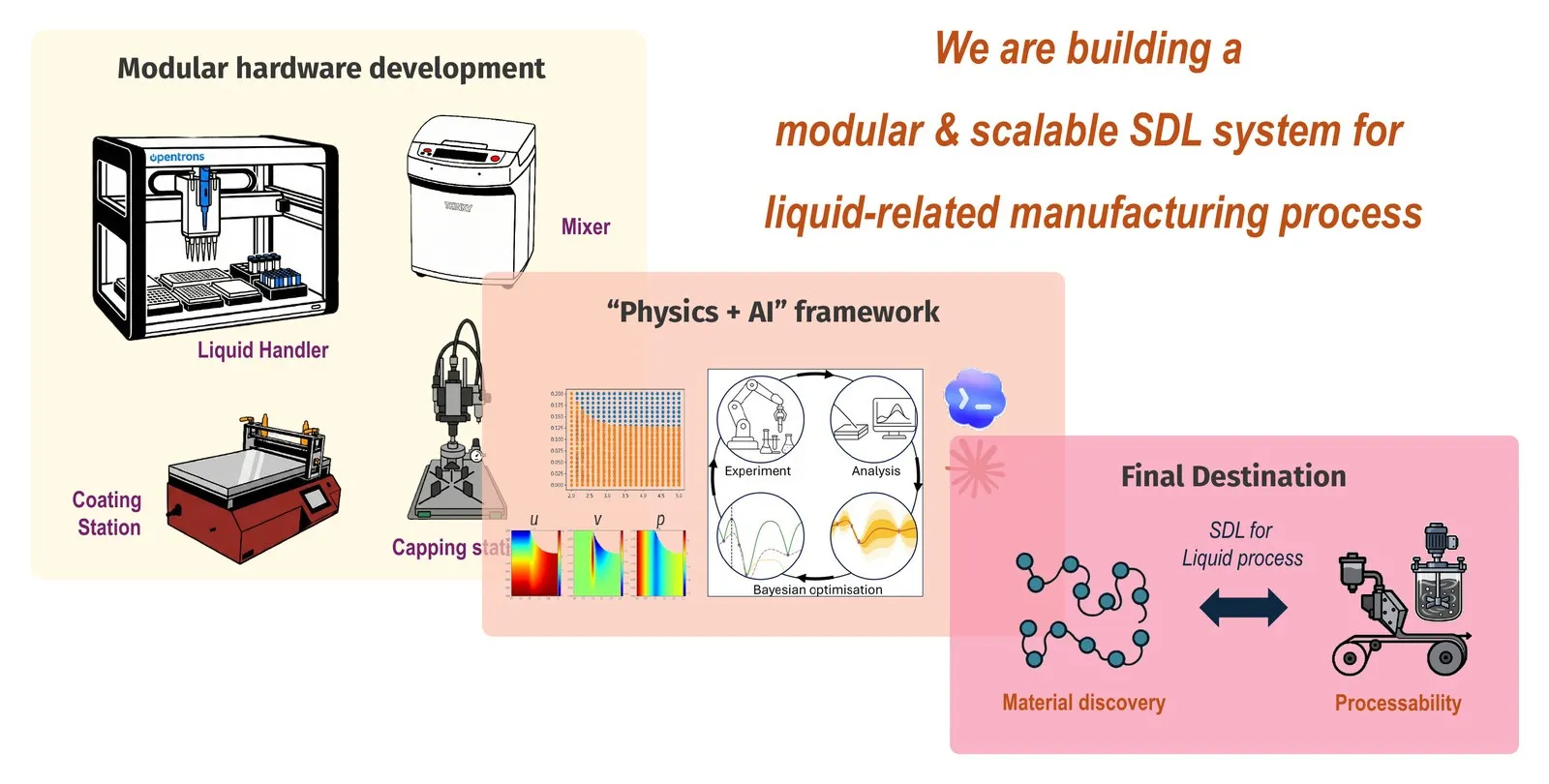
Beyond discovery
Autonomous translation, not just autonomous discovery
Materials-discovery SDLs ask which candidate is promising. We build laboratories that answer the next two questions: can it actually be made in a real unit process — and can it be scaled?
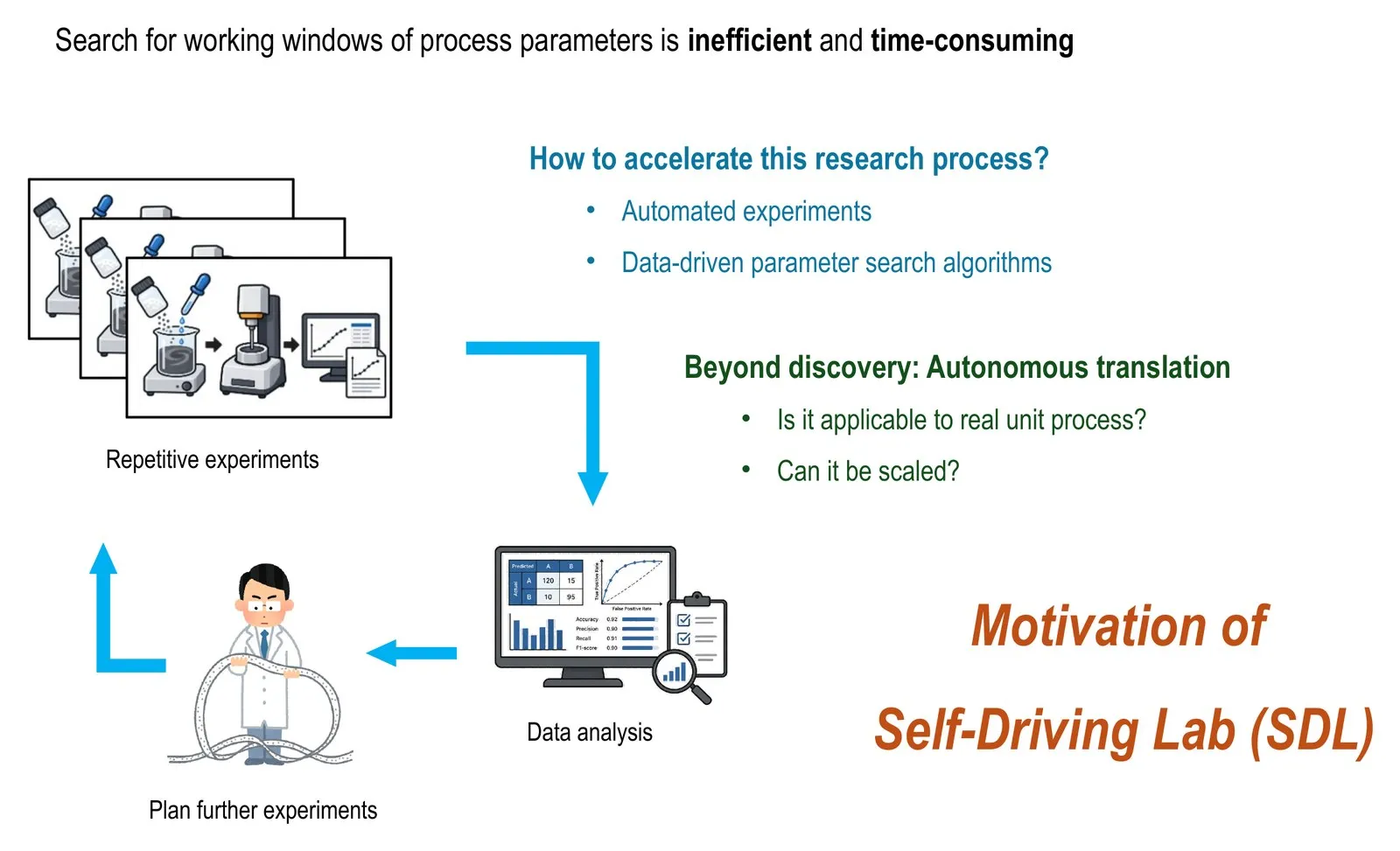
Motivation
Why the search for a working window has to be automated
Run experiments, analyse, plan the next ones, repeat: finding the working window of process parameters by hand is inefficient and slow. Automated experiments and data-driven search break that loop.
The loop
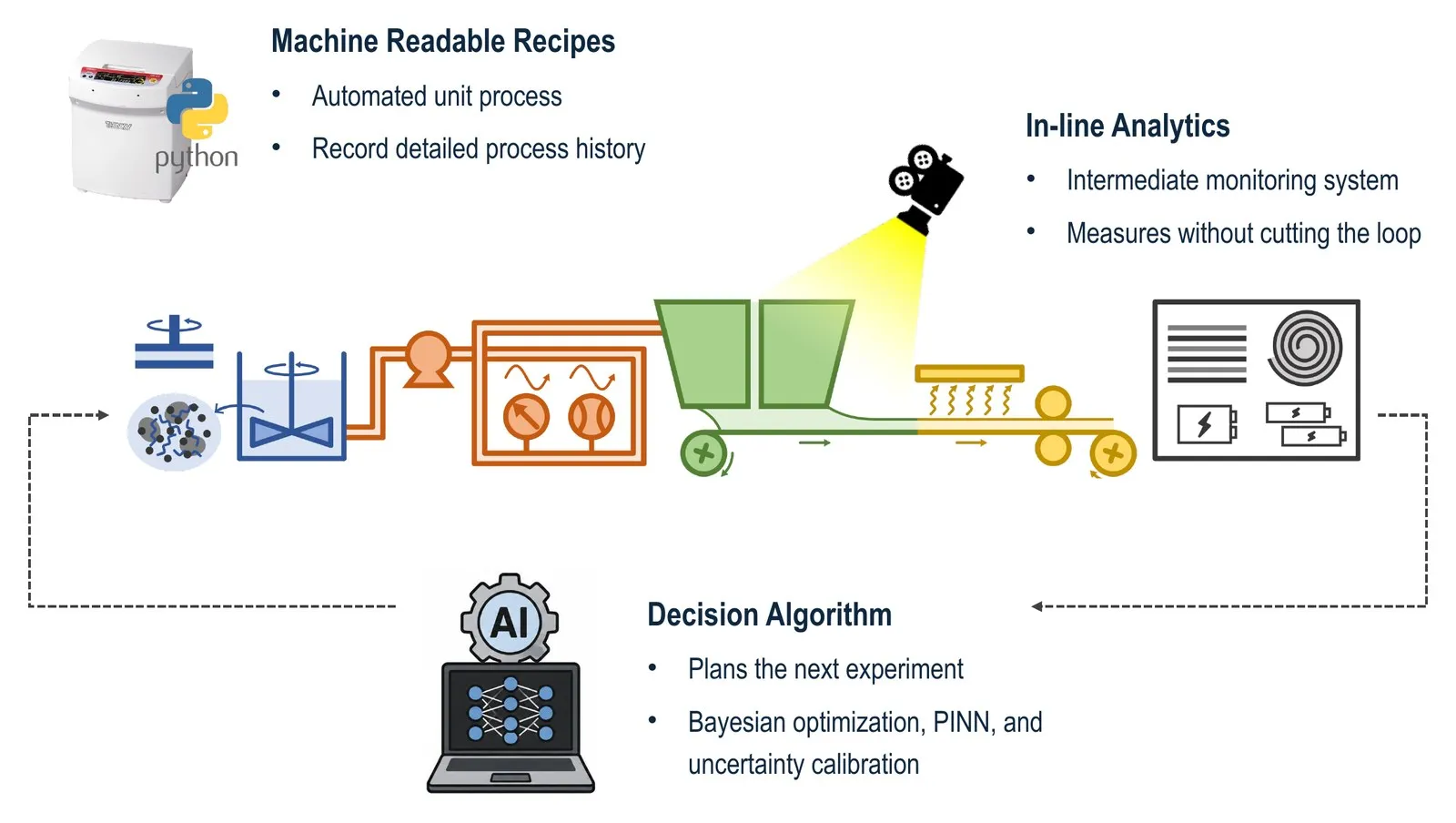
Anatomy of a self-driving process lab
Machine-readable recipes drive the unit process, in-line analytics measure without cutting the loop, and a decision algorithm plans the next experiment.
Scale-up
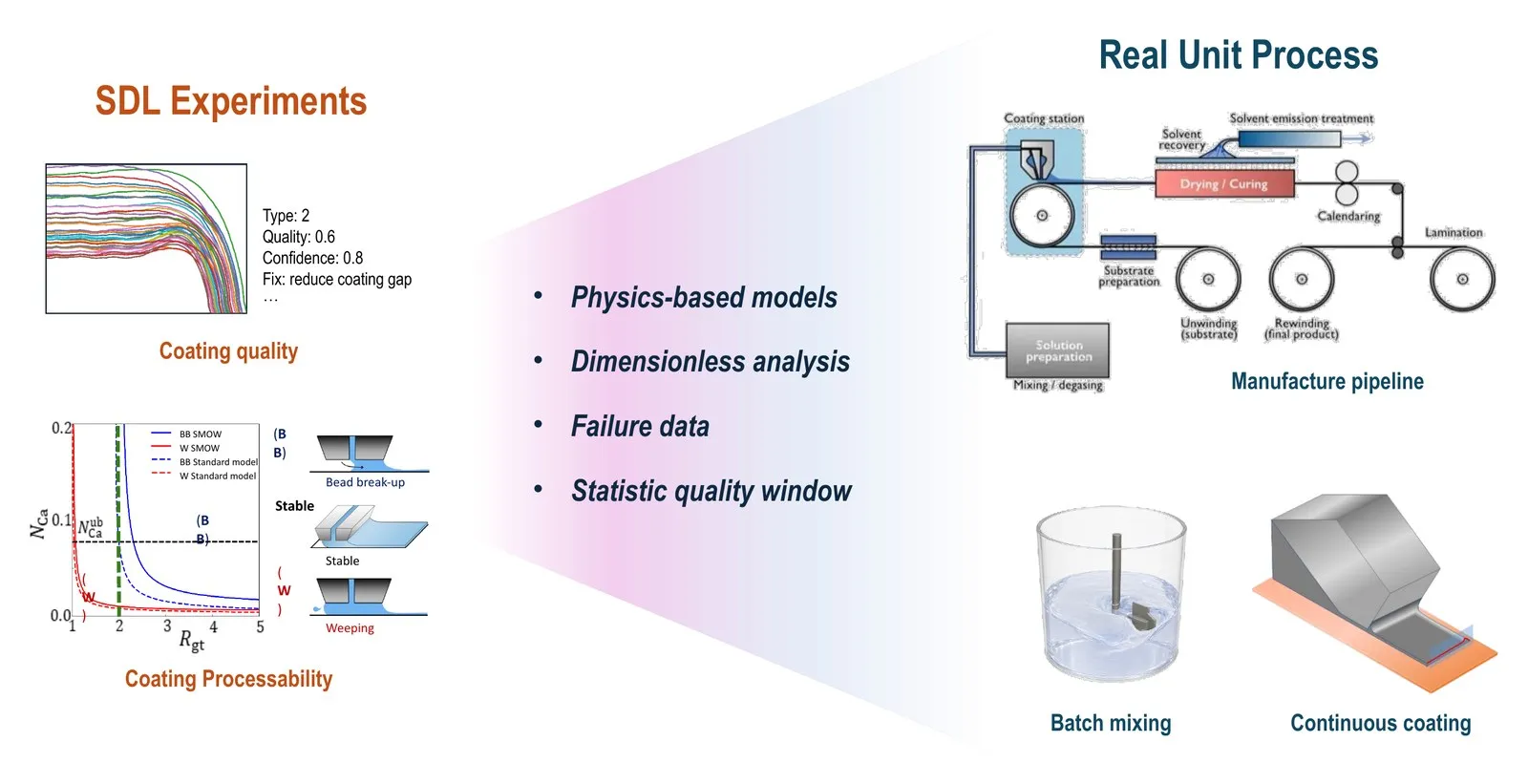
Scalable processability maps
Physics-based models, dimensionless analysis, and failure data turn SDL experiments into statistical quality windows that carry over to a real manufacturing pipeline.
Where we are going
Toward autonomous R&D for liquid-based manufacturing
Liquid handler, planetary mixer, coating station, capping station — modular hardware under a "physics + AI" framework, scaled from material discovery to processability.