Where the elasticity comes from
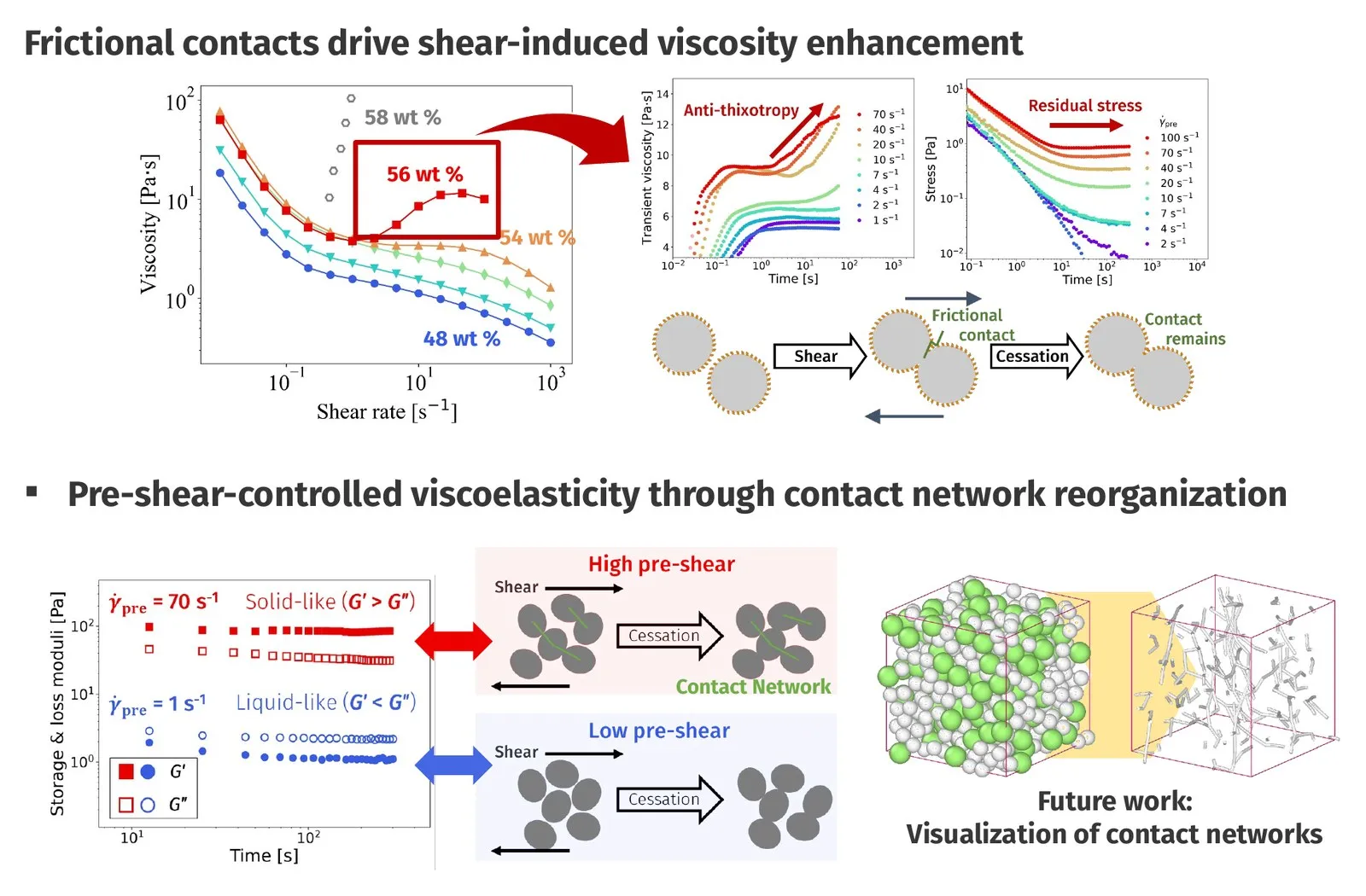
A slurry remembers how it was sheared
Concentrated slurries are held together by frictional particle contacts. How those contacts form under flow — and how many survive after it stops — decides the stress the slurry carries into the next unit operation.
Time & shear-rate scales
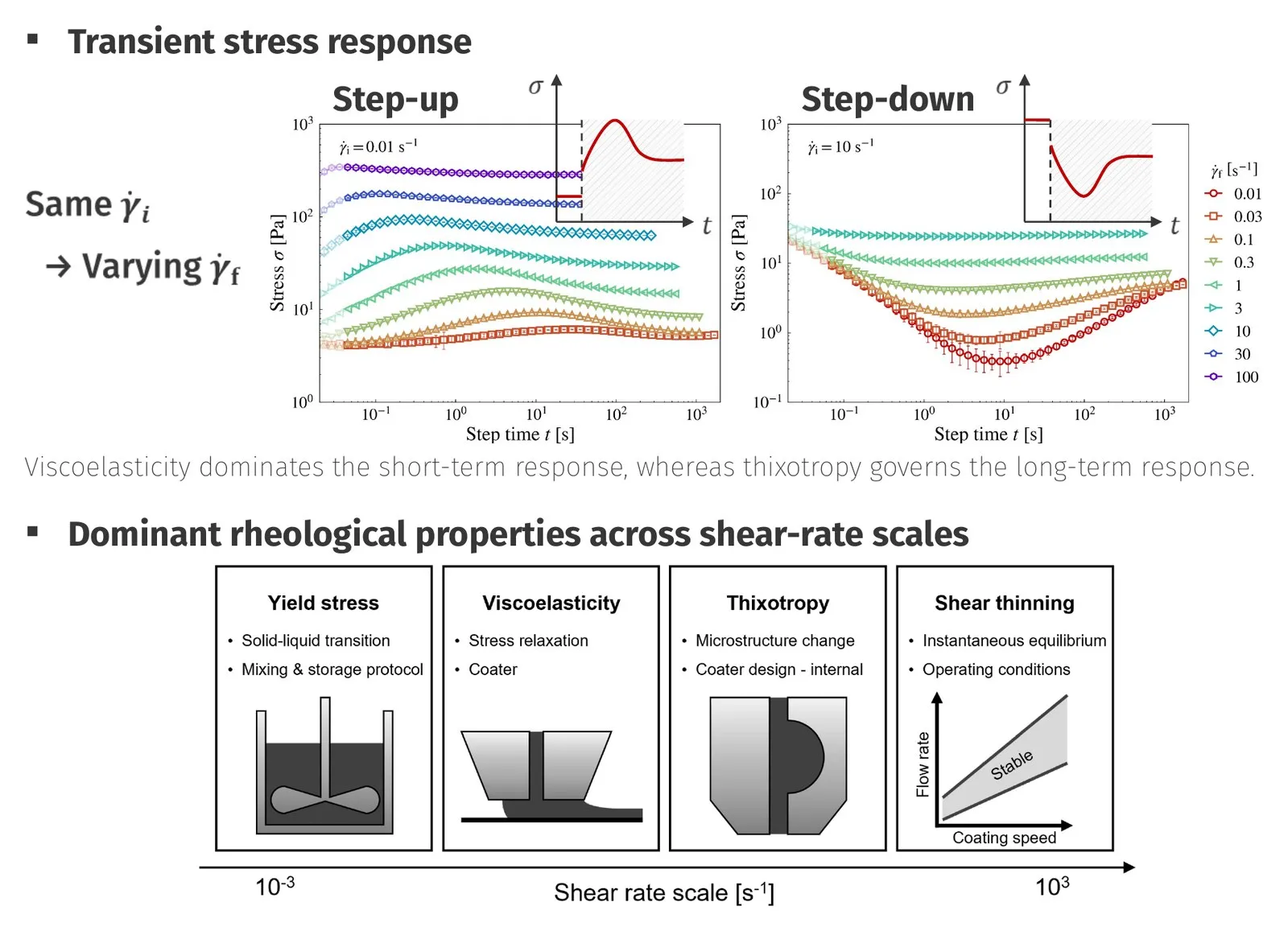
Which property dominates depends on when you look
Step-up and step-down transients separate the short-term viscoelastic response from the long-term thixotropic one.
Frictional contacts
Contact-governed rheology of concentrated slurries
Above a solid-loading threshold, shear-induced contacts drive viscosity enhancement — and a pre-shear that reorganizes the network flips the same slurry between liquid-like and solid-like at rest.
Formulation
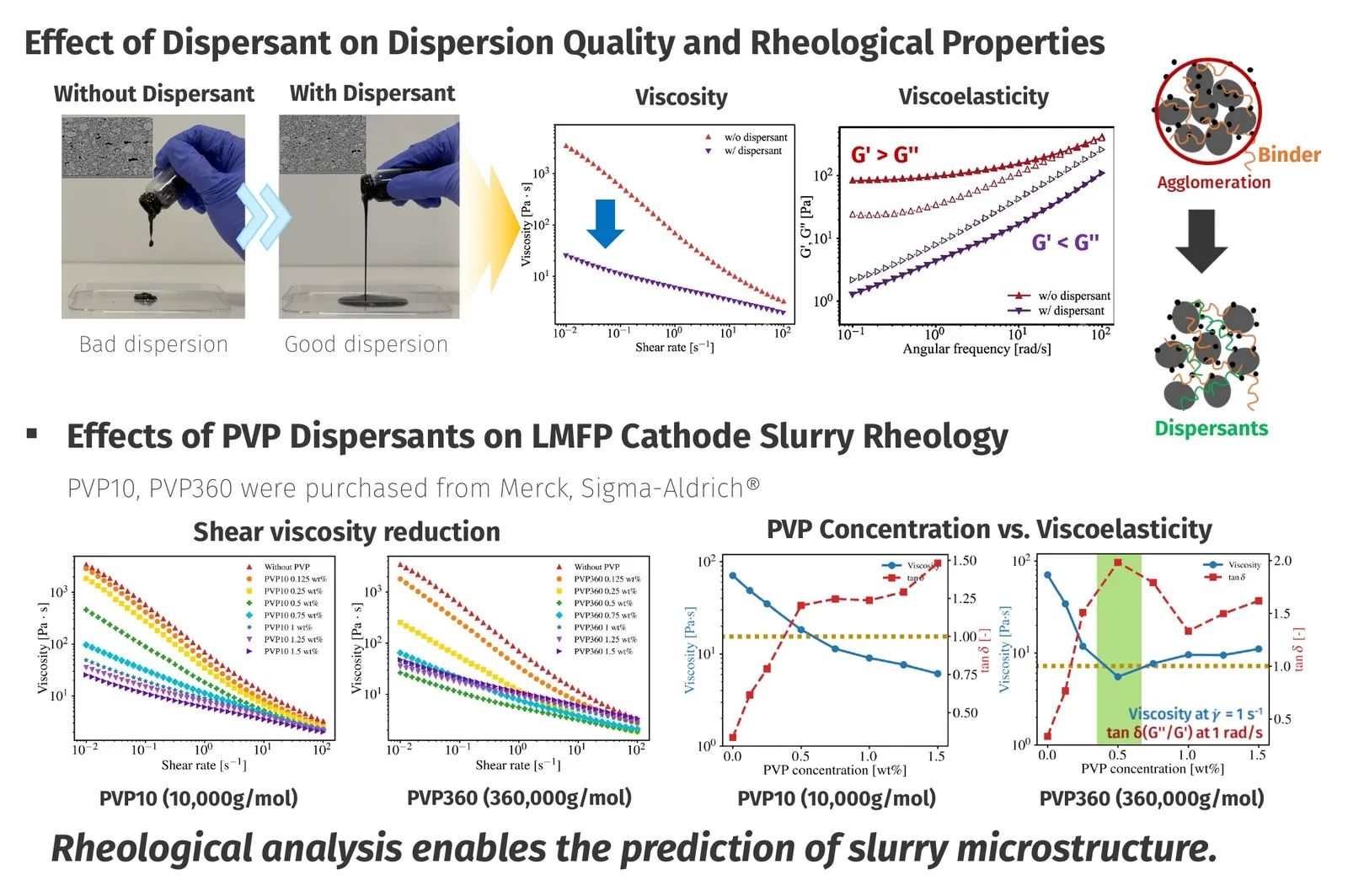
Rheology controlled by binders and dispersants
Dispersant molecular weight and concentration set dispersion quality; the resulting viscosity and tan δ let us read the microstructure back out.
Probing the intact slurry
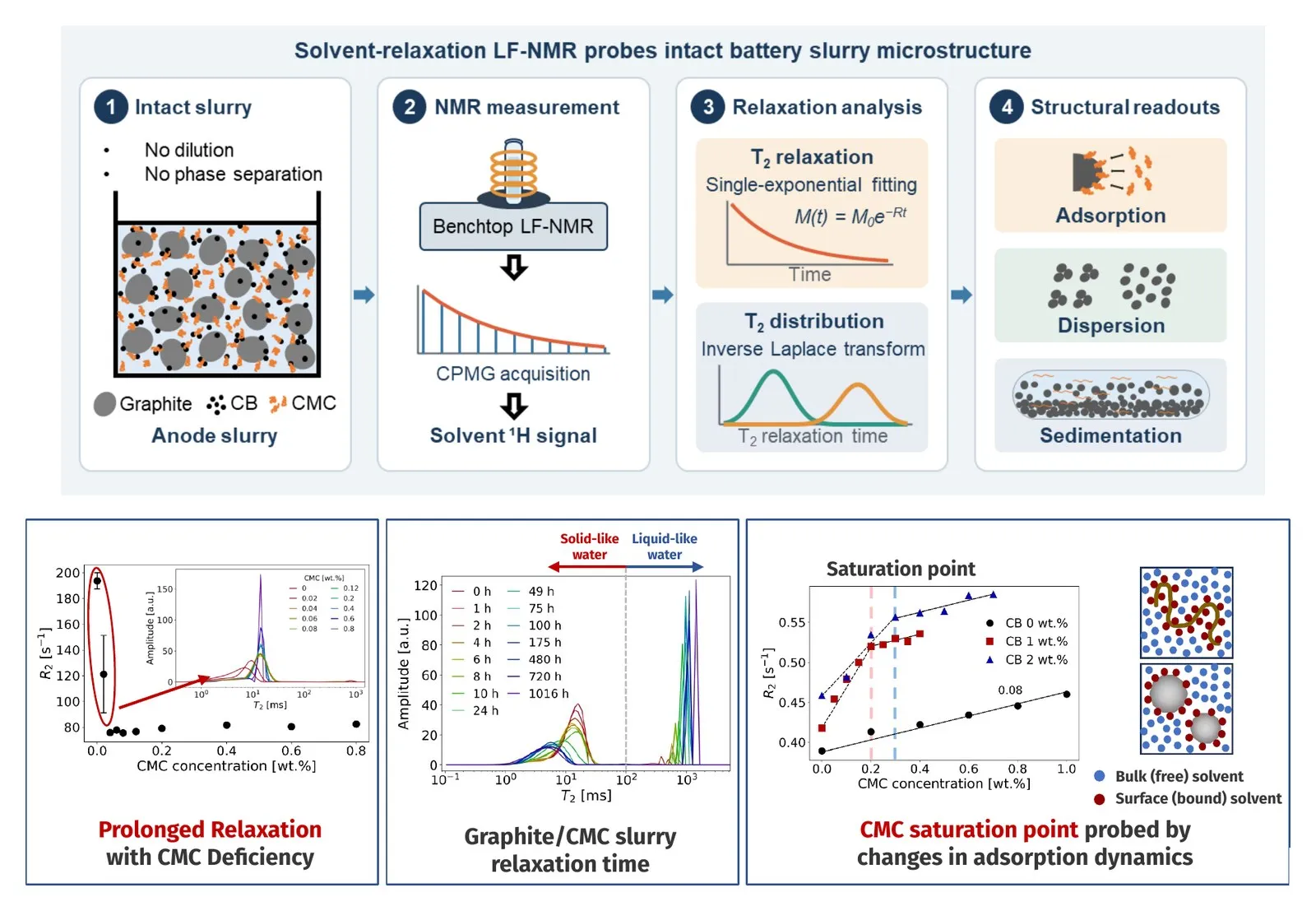
Solvent relaxation probed by low-field NMR
No dilution, no phase separation: T₂ relaxation of the solvent locates binder adsorption thresholds, dispersion state, and sedimentation in the slurry as it is.